

Introduction

canvas, 134.3 × 202.6 cm. National Gallery of Art.
The Christian life is not for the faint of heart. To live in a fallen world requires nerve and conviction. To renounce idols and refrain from immorality demands courage to pursue a countercultural mode of living and fearlessness to embrace an exilic identity. To raise our mast under the banner of Christ and his church calls for selfless sacrifice and a bold servant spirit. We prioritize self-rule so that we can make ourselves slaves to Christ—and servants to all. To raise children in the fear of the Lord and cultivate homes adorned with biblical values calls for patient endurance and undying loyalty to our heavenly Father, the risen Christ, and the indwelling Holy Spirit. To live a life of faith is to overcome hardship, endure suffering, and be faithful until the end. Asserted in Scripture and proven throughout the history of the church, Christians do not mature in spite of struggle; they grow in the midst of adversity.
Certainly, the road to faith maturity is a path of immense difficulty—duty tested in tribulation, character refined by affliction, faith proven under trial, purity gained by overcoming temptation, and hope exercised as a defiant insistence that Christ will win in the end. The mature Christian life is marked by these manifold qualities and priceless virtues. Godly character is forged through opposition and ordeal. But this bold vision for a fortified faith cannot be realized without a key biblical virtue—a faith-born capacity amply and urgently commended by Scripture. This virtue is wisdom: spiritual understanding in the fear of God that leads to skillful and sanctified living in God’s world. Fundamentally, those who are biblically wise become artisans of life.
The pursuit of wisdom is inherent to discipleship and faith development. The mature Christian embodies discernment and understanding. Godly families instruct their children in prudence, inculcating God-centered judgment and godly sense across the generations. Churches establish disciples in the faith so they can become watchful and circumspect in a harrowing world. Although not commonly associated, wisdom and faith formation are inextricably bound together. Genuine faith manifests itself in wisdom; wise living is born by faith in the fear of God. All manner of boldness, bravery, and spiritual brawn will be of no use if it is not ruled by a life of wisdom. The world is a dangerous place, fraught with lurking enemies and rival kingdoms. In the end, only the wise can navigate the perilous terrain of this world as faithful citizens of God’s kingdom.
In the Bible, Proverbs is a boundless treasury of wisdom, especially for living in a chaotic and confused world. Many laud Proverbs for its accessible kernels of inspired, practical truth. Situational proverbs that unlock “how life works best” are usually one of the common “first contact points” with Proverbs. But when it comes to letting Proverbs set an agenda for faith formation and moral development, it is drastically underutilized. Many wrongly relegate the mere idea of wisdom and philosophy to the realm of lofty abstraction—questions of intrigue for imposing intellects but not germane to those who live in the real world. More than a few struggle to grasp how wisdom and discipleship connect. While many view discipleship as a grounding in the essentials of the faith, they can tend to view wisdom as some second-order spiritual attainment. In addition to these common misconceptions, popular Christianity has adopted a generic, androgynous spirituality—depictions of faith maturity that unhelpfully make no distinction between godly men and women.
In what follows, we will explore the unique canonical, theological, and pedagogical purpose of Proverbs. By exploring Proverbs 1–9—rightly understanding it to be an introduction to faith formation—we will see the indispensable usefulness of this portion of Scripture. Essentially, this primer attempts to commend Proverbs as vital for building a framework for faith and moral development. This task is of paramount importance. To become wise and mature in the faith we need to understand the content and the means of faith formation. Without these foundations firmly in place, churches, parents, pastors, and disciples will remain ceaselessly juvenile. We need to both understand what wisdom is as well as how to grow in wisdom. Proverbs offers both. Therefore, in the following primer, we target several aims: 1. establish the literary and occasional relevance of Proverbs, 2. explore Proverbs as a coherent vision for faith formation in the wisdom tradition, 3. unearth the root metaphor of journey and quest, 4. consider the unique importance of rites of passage for formation, 5. commend Proverbs 1–9 as a blueprint (a primer in its own right) for developing a holistic spiritual pedagogy, and 6. explore the unique portraits of masculinity and femininity offered to us.
Before delving into the aforementioned matrix of ideas, note the logical flow and interrelatedness of these key ideas. The enduring relevance of Proverbs as inspired Scripture meets us in the midst of real life, helping God’s people in all generations and cultures walk wisely with the Lord in the midst of a dangerous and depraved world. Proverbs’ preeminent theme of wisdom is really a means to depict maturity and piety in faith—the spiritual fruit of those who fear the Lord with steadfast devotion. In Proverbs, the fear of the Lord is the foundation of wisdom and a synonym for faith. Solomon’s work portrays the life of faith by the governing metaphor of journey and quest. Essentially, God’s people are pilgrims who trek through the temporary life of this world toward eternal life in the world to come. Because life is a journey, it transpires in seasons and stages—natural life cycles as well as milestones of faith development. Helping people mature in the journey of faith requires us to help them make passage across varied stages of life and faith. To help people successfully cross these thresholds, we need a spiritual pedagogy: a theological understanding of how people change. Proverbs 1–9 brilliantly offers this foray into faith formation. This short work is a primer on that biblical primer. Alongside of its pedagogical principles, Proverbs also offers portraits of godliness—discreet depictions of what it looks like to make progress in the faith. These portraits come in the form of parallel pictures of godly men and godly women. In Proverbs, these nuanced portrayals of noble masculinity and virtuous femininity are contrasted against foolish and godless foils. We now consider each of these core ideas in turn.
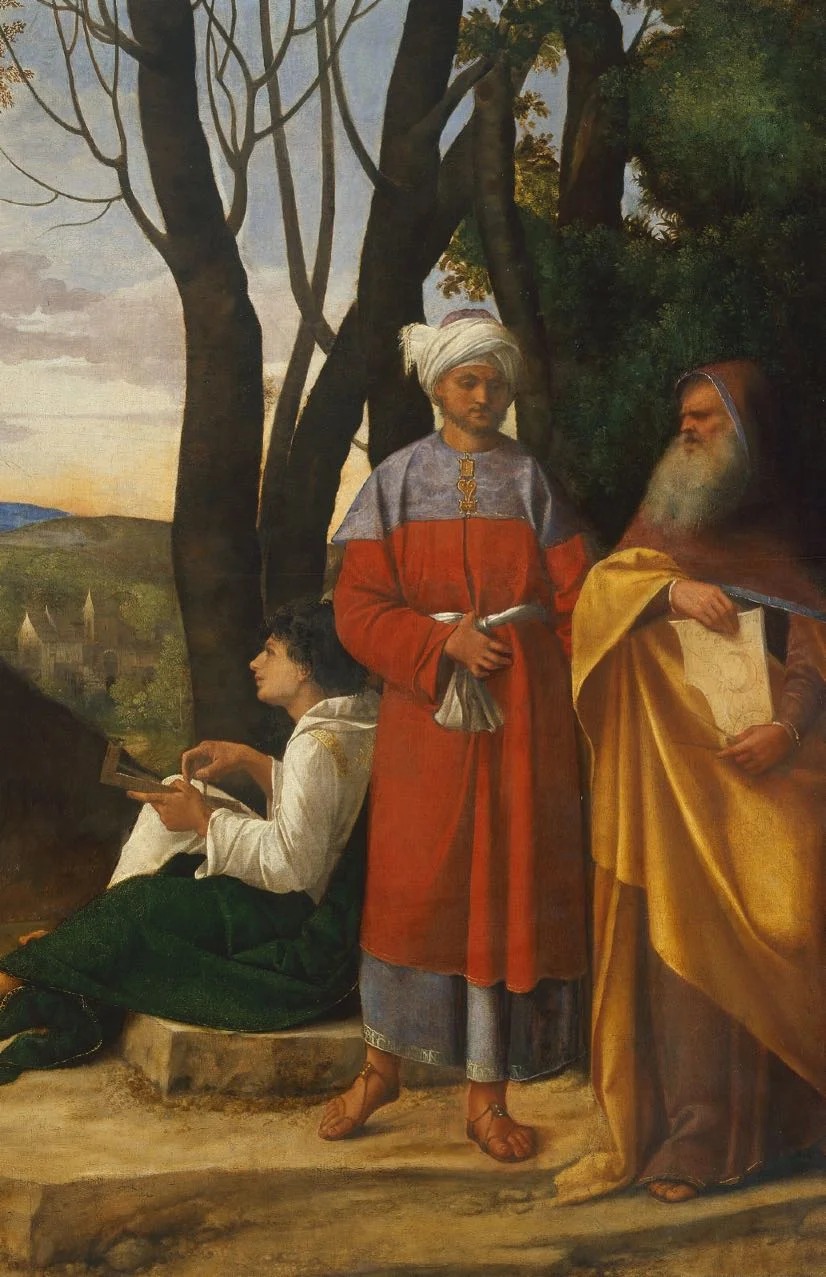
146.2 cm. Kunsthistorisches Museum.