

Come, Eat of My Bread
When we are undertaking a long journey or voyage we should get an instructor … Grace begins at home; there is the factory of all the virtues; there this life has become exquisitely refined by a continual progress …
… there, whether men are silent or whether they speak, there is large opportunity for being instructed in this heavenly citizenship through the actual practice of it … the man who acts as well as teaches … he is the man who is truly living, and has the bloom of beauty.
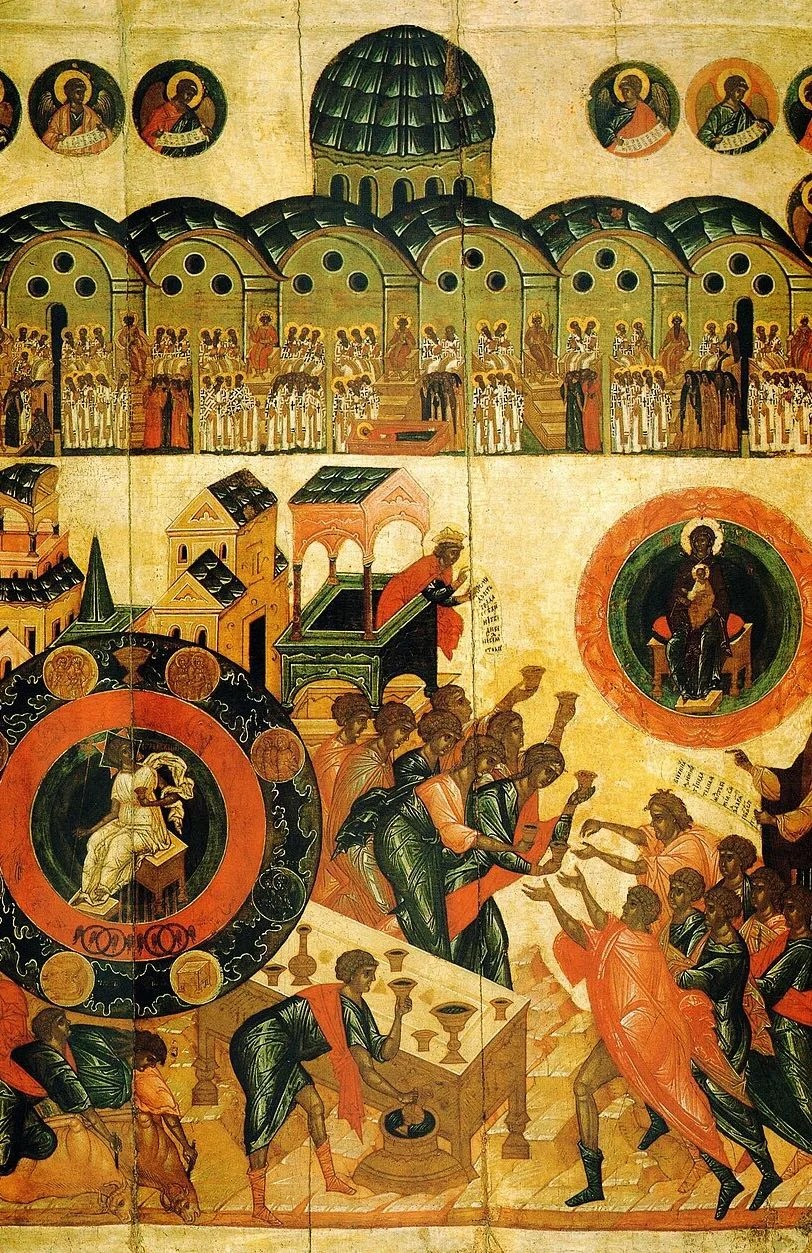
wood, 146 × 106 cm. State Tretyakov Gallery.
Making Passage Across Life’s Thresholds
When faith formation is viewed as a journey, we begin to see the importance of helping people cross major life milestones—making passage across nodal thresholds. Life is a sojourn of stages, demarcated by junctures, crossroads, landmarks, and way-stations that mark the way. Liminality is the idea that people reach significant transitional moments in life where they face a formative line of demarcation, urging them to traverse across an important threshold and enter into a new life reality. Rites of passage empower communities to mark a person’s transitions across liminal spaces. Wisdom literature, especially Proverbs, meaningfully depicts faith formation as involving rites of passage for those on the journey of life. Proverbs summons the humble and receptive to make passage into wisdom. Effectively, faith formation in the fear of God involves marking milestones of life and faith development, helping pilgrims get onto the paths of righteousness, make progress toward wisdom, and eventually become initiated into her. In this way, we serve well ourselves, our families, and our churches by understanding how rites of passage serve the biblical project of faith formation in wisdom.
On one level, Proverbs 1–9 can be understood as an urgent appeal (through ten lectures) for the simple, youthful, and naive to embrace wisdom. But the initial appeals to embrace wisdom in Proverbs 1–7 climax in Proverbs 8–9 with a picture of Lady Wisdom building a house that one is to inhabit and laying out a table at which one is to feast. Solomon is not merely aiming to teach his son about wisdom; he is earnest to initiate his son into wisdom—to forsake the wayward harlot of foolishness and to betroth the unparalleled beauty of Lady Wisdom. In this way, the first nine chapters of this collection of wisdom sayings—and the book as a whole— can be seen through the lens of a rite of passage. The voice of wisdom invites its readers to leave behind an old season of life—youth, naivete, evil, and foolishness—to enter into a new season of responsibility and discretion, and to be incorporated into the faith community with a whole new status.
In the context of Proverbs, the invitation for the youth to cross over thresholds into wisdom comes from the father, the mother, the faith community, and Lady Wisdom. The appeal of the father and mother punctuate the text, inviting the son to embrace wisdom (Proverbs 1:8-10, 15; 2:1-5; 3:1-4, 11-12, 21; 4:1-2, 10, 20; 5:1-2, 7; 6:1-3, 20-22; 7:1-5; 8:32). Wisdom itself is personified as a beautiful woman who is to be loved, cherished, and adored (1:20-33; 8:1-36; 9:1-12). In Proverbs 1–9, Lady Wisdom is contrasted to Dame Folly, a crude anti-wisdom figure depicted as a forbidden and strange woman (5:1-23; 6:20-35; 7:1-27; 9:13-18). Certainly, the appearances of the wayward woman are a warning against lust, adultery, and sexual sin. But this unsanctioned and unsanctified mistress serves a larger purpose, representing the death-trap of a foolish life. To be initiated into the wrong community, the wrong values, the wrong beliefs, and the wrong way of life is like falling prey to a seductress in which one becomes a lamb to the slaughter, a victim culpable of his own death sentence. In Proverbs 1–9, the loud and beautiful voice of wisdom is the choice alternative voice to boisterous and lewd voice of folly and evil. Both are seeking to initiate the youth, forming him into a certain kind of man. Wisdom makes an appeal for the youth to betroth himself to her, turning him into a righteous man of royal quality. Folly hunts the youth to degrade, destroy, and devour him, leading him on the paths of death and self-demise. Wisdom ennoble; folly unmans.
Proverbs also depicts negative rites of passage—initiations into wickedness. The gang entices the youth to join—cross over into—their greedy and homicidal ranks (1:8-19). Once they join the criminal band, they seal their own deadly fate. Wicked men “leave the straight paths” (2:13) for crooked, perverse, and devious ways (2:12-16). These evil men seek to allure youth into “the way of evil” (2:11). The forbidden, strange woman seduces the youth to “go to her” (2:19) and abandon the paths of life (2:16-19; 5:1-14; 6:20-35; 7:1-27). She wanders onto the streets (7:12), she lurks at corners (7:12), she meets her naive prey outside (7:10-11), ensnaring the simple who stand at the crossroads (7:8). Like a predator, she targets the simple and naive (7:6-9). She lures these untrained and immature youth to leave the road (7:25), stray onto her paths (7:25), and enter her home (5:8; 7:19-20, 27). Inasmuch as a rite of passage involve crossing life’s thresholds, these deceived youth quite literally cross over the threshold—entering into her house through the door (5:8)—into deadly vice and vile voluptuousness. The house of the harlot sinks down to death (5:5-6; 7:18-19, 26-27); those who enter in with her to take their fill of illicit love go down to destruction with her. Godless initiation by the gang, evil men, or the forbidden woman each presents a warring rival to godly rites of passage—initiation into evil that leads to self-ambush, self-destruction, self-demise, self-treason, and self-condemnation (1:18-19, 31-32; 6:27-29, 32; 7:22-23; cf. 1:26-27).
While we consider initiating our youth into wisdom, righteousness, mature adulthood, and Christian living, we must be aware of rival rites of passage. Through media, entertainment, and education, culture’s agenda is to initiate youth into a way of worldly thinking and corrupt living. The world is militantly insistent to admit people to its ranks. There is a grand spiritual conflict at work—a spiritual battle raging for the lives of the youth and the simple. The world seeks to lure, entice, seduce as many as possible to join its corrupt society of godlessness. Once initiated, these deluded and misguided victims are captured as in a deadly snare. On the contrary, God summons people to join his society—a faith family defined by common confession of and allegiance toward King Jesus. Formation is wisdom combats the allurements of folly with the captivating beauty of wisdom that leads to moral transformation. God’s people—citizens of the city of God—live out their transformed lives as salt and light in a fallen world.
But moral development is much more than measuring the mere goodness or badness of conduct. We must aim to initiate youth into a wise life that leads to deep transformation: establishing beliefs, reforming conduct, purifying motivations, sanctifying imagination, building worldview, fortifying relationships, and inculcating virtue. Wisdom has built her house and summons people to enter and dwell therein. Wisdom has spread out a banquet and gives the invitation: “Come, eat my bread and drink the wine I have mixed” (9:4). To make passage into wisdom is not only to experience life preservation, but to undergo life transformation. To this end, we allow Proverbs to help shape our approach to formation—a spiritual pedagogy—that grounds us with a biblical perspective on how we grow, mature, and change.
Key Ideas
- Rites of passage mark major milestones of life and faith by helping people cross thresholds—make passage across—various seasons of life.
- Liminality is a borderland space—a demarcation of two spheres—which summons one to cross into a new status and social standing in the community.
- Rites of passage aim to initiate and involve establishing boundaries, overcoming ordeals, elucidating progress, inaugurating new seasons, incorporating into a community with a new identity.
- The world has negative, rival rites of passage that seek to initiate youth into wickedness; Christians must combat these negative rites of passage with godly rites of passage.
Reflection Questions
1. What are major milestones in life and faith? How would you describe the typical way people transition from one phase to another?
2. Did you have any help in navigating the major milestones of your life and faith? What was your experience like as you went through major transitions in life and discipleship?
3. Why might it be important for Christian families and church communities to take rites of passage and liminality seriously? What are the consequences if we do not help people navigate the major transitions of life?
4. What are key characteristics of a rite of passage? How might we approach rites of passage from a distinctively Christian perspective? How does the book of Proverbs assist us in this work?

canvas, 72.5 × 94 cm. Museum der bildenden Künste.
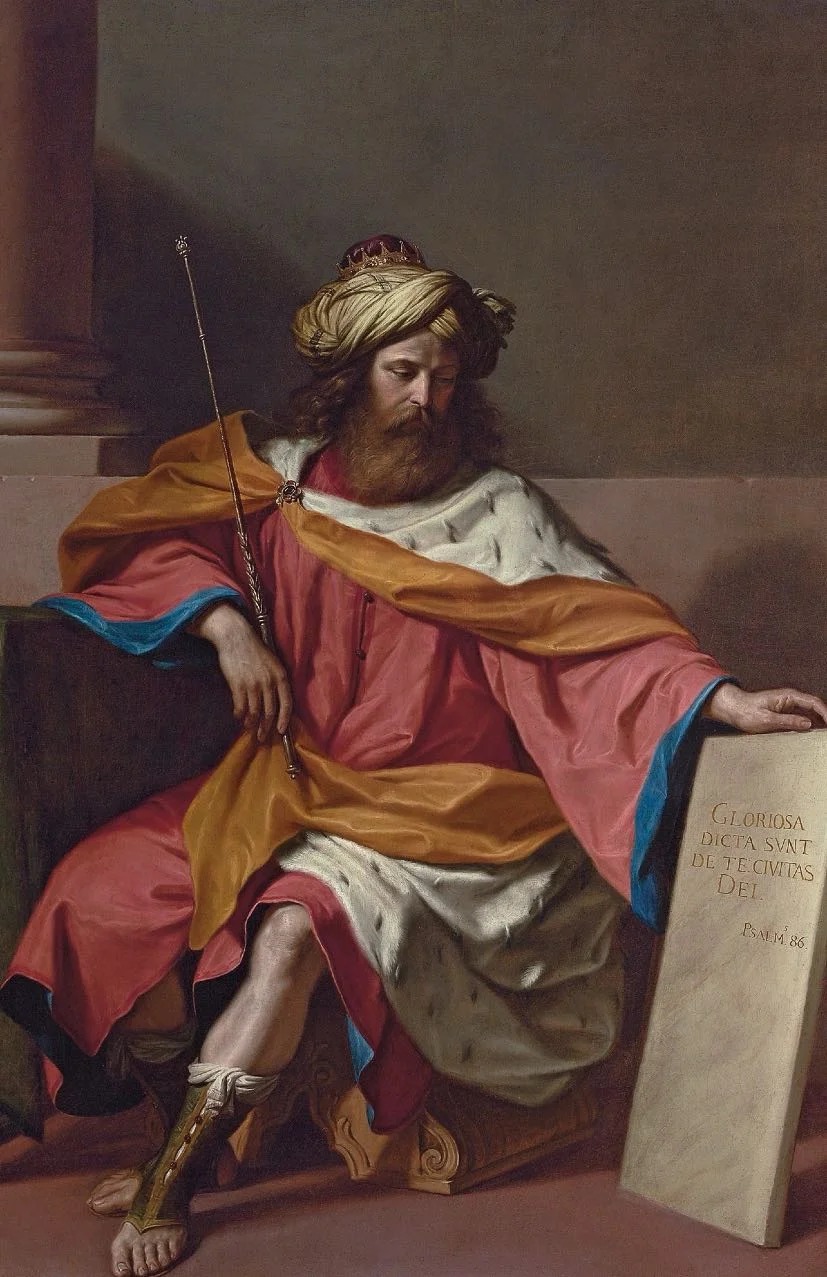
canvas, 223.5 × 170.2 cm. National Gallery.
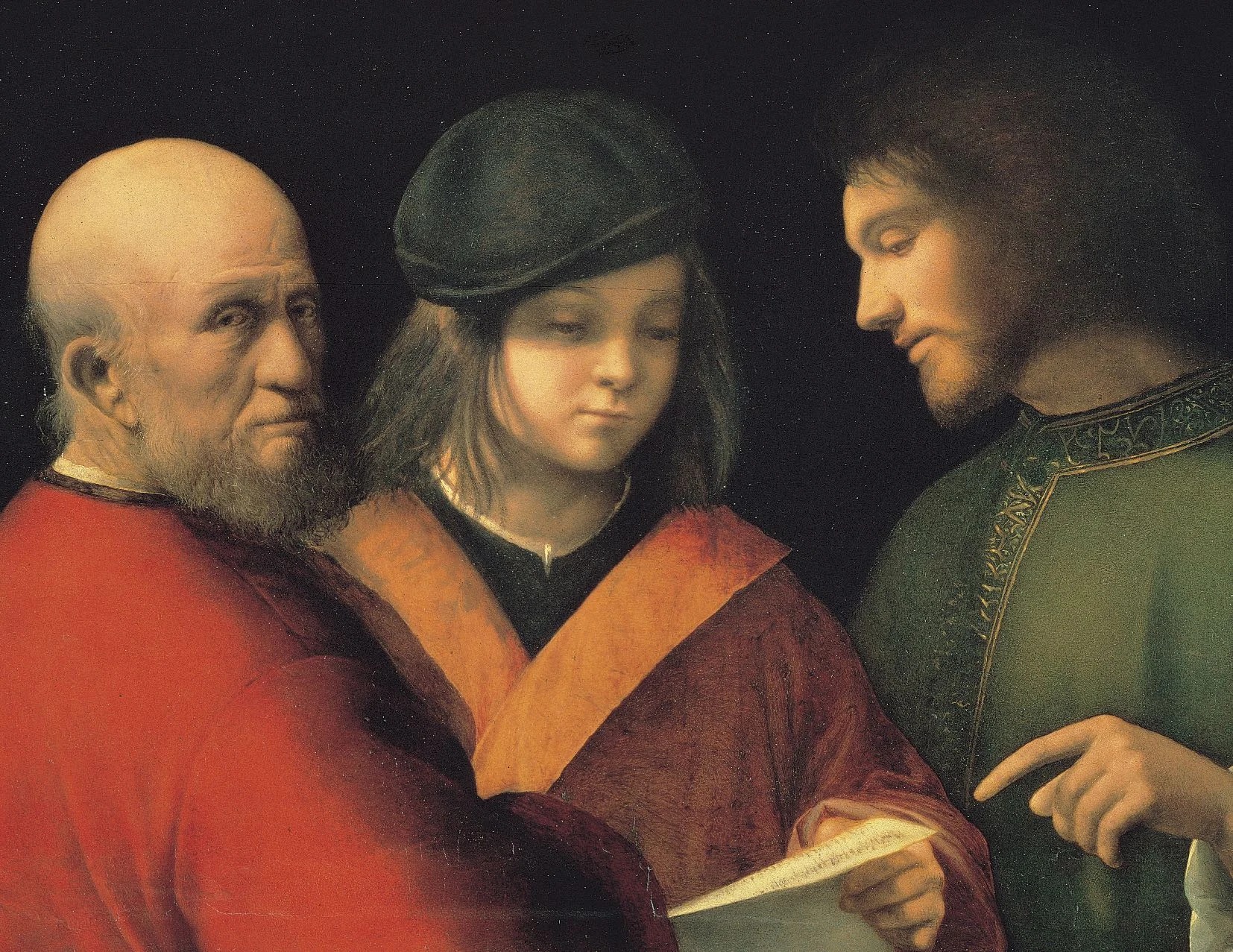
Oil on panel, 62 × 77 cm. Palazzo Pitti.