

The Fear of the Lord
The business done in the home is nothing less than the shaping of the bodies and souls of humanity. The family is the factory that manufactures mankind.
Proverbs as Coherent Vision of Faith Formation
Understanding the enduring relevance of Proverbs calls for us to understand how its preeminent theme of wisdom fits in the larger project of faith formation. For many, the book of Proverbs is an ancient compendium of wisdom sayings: a collection of assorted, concise, and practical observations on living life well. Not a few read this portion of Scripture for the ease of its immediate application and real-world implementation. Succinct and compact, many of these wise sayings lodge themselves in one’s mind as they directly connect (sometimes effortlessly) with shared human experience. It is true that a bulk of this inspired Scripture consists of pithy maxims relevant to a wide range of useful topics: self-control, marriage, friendship, speech, finances, business, neighborliness, oaths, and work. An arrangement of sayings that can feel at times dispersed, Proverbs’ diffuse arrangement matches the (at times) scattered and unpredictable realities of life. In this sense, Proverbs is accessible and adored because it profitably and profoundly addresses humanity’s felt needs and pressing concerns, while also speaking to existential questions of meaning and purpose. The collection of inspired wisdom is applicable in its breadth and profound in its depth, giving it a universal quality.
But Proverbs is much more than a topical index addressing miscellaneous subjects. The appeal of its immediate relevance to life interests is supported by much deeper offerings. The broad range of thematic interests—expressions of wisdom—in Proverbs is supported by a sound substructure about the nature, value, and essence of wisdom. In this way, when Proverbs is viewed as a whole book—intentionally organized and arranged—it offers a holistic vision and integrated system for the life of faith. As a carefully designed book, Proverbs inspires us to faith formation in the fear of God, and provides curricular and pedagogical help toward this end. Taking note of the texture, emphasis, and structure of this biblical book will help us understand its portrayal of wisdom along with patterns and principles for faith development. Four noteworthy observations help to elucidate Proverbs’ formational agenda.
First, Proverbs offers a portrait of a godly life. Overarching its many topics is an urgent moral concern. True wisdom is not merely about living a successful life on the world’s terms (although it does provide such kinds of counsel), but living a righteous life before the true and living God. Biblical wisdom offers a picture of a well-lived earthly existence in order to secure a God-given eternal inheritance. Alongside the common contrasts between the wise and the foolish, the simple and the prudent, and the youthful and the learned are the moral contrasts between good and evil, righteousness and wickedness, and justice and injustice. Solomon commends to us: the righteous life is the epitome of wise living. Proverbs is more interested in blessings that come from moral formation—conformity to the character of God—than about maximizing transient earthly benefits.
Second, Proverbs does not leave us in the dark about how moral formation occurs. Inasmuch as it offers insight into the content of wisdom, it also illuminates the path on how to become wise. In particular, Proverbs 1–9 serves this unique purpose. The bulk of these first nine chapters offer a series of lectures—appeals to Solomon’s son(s)—on why he must obtain wisdom at all costs. In the course of making his earnest appeal to get on the path of wisdom, he elucidates how a simple youth can grow on this path into a godly adult. Proverbs 1–9 not only serves as an introduction to the book—an initial appeal before the topical assortment of maxims—it also presents a theology of formation. In essence, Solomon’s lectures to his son offer a biblical perspective on education: a spiritual pedagogy that helps God’s people know how transformation, maturity, and growth take place. Essentially, these principles help us know “how people change” in a way that serves our own personal growth, the ordering of our households, and the responsibilities we have to train others in the righteous life.
Third, inasmuch as Proverbs is moral and formational, it is also developmental, depicting phases of faith formation. The entirety of the book presents growth in wisdom as a progression. The book begins with household instruction of a father (and mother) to a young and naïve son (Proverbs 1:8–9:18) and ends with a mother’s instruction to a noble and royal ruler (31:1–31). The overall movement of the book of Proverbs is from home to royal court, family to cosmos, boyhood to manhood, naive existence to noble vocation, passive living to proactive leadership. This general progression helps each reader of Proverbs think about his own progress from child to adult, son to father, student to teacher, apprentice to master, citizen to leader, boy to king.
A fourth characteristic is critical to note: Proverbs highlights the importance of alignment of one’s internal person and external conduct. One way to understand Proverbs is as a manual for living wisely in God’s world. Wisdom as prudent behavior will only take one so far. One quickly learns that Proverbs is concerned that we order the world of our interior person so that we can faithfully live in the world that God has made. Many of the Proverbs address internal realities (i.e., motivations, values, love, contentment) and character attributes (i.e., self-control, humility, generosity, patience, etc.) alongside of external conduct (i.e., just scales, prudent speech, diligent work, relationships, etc.). As has been already intimated, the supreme virtue that organizes all other aspects of wisdom and spirituality is “the fear of the Lord” (1:7). This inward disposition of reverence, awe, trust, affection, and submission to God is the kernel from which a life of wisdom blooms.
Although it is ancient in origin, Proverbs is timeless in its relevance. For those looking for specific and anecdotal assistance in daily living, one will encounter teeming waters. For those looking to mature and develop, this book will offer compelling portraits of godly men and godly women (and foils of their opposites). For leaders in home, church, workplace, school, or city, Proverbs assists these overseers, shepherds, and governors to steward their responsibilities well. For everyone concerned about faith formation, spiritual growth, and the development of Christian character, this collection of proverbial thinking will give blueprints for how people change. For the young and immature, Proverbs offers a hopeful map for the best of all kinds of lives—piety in the fear of God. Ambassadors of God’s kingdom, pedagogue, pastor, and parent alike are assisted by the coherent vision of spiritual formation presented in Proverbs. For all who want to live prudently before God, shrewdly in the society, faithful in the home, and boldly before the watching world, this book commends the best of all paths in the fear of God—a path that requires us to view faith formation and moral development as a journey.
Key Ideas
- Biblical wisdom involves moral formation in the fear of the Lord.
- The assorted, topical wisdom sayings in Proverbs are undergirded by a unified vision of faith formation that amount to a spiritual pedagogy: a theology of how people change and grow in wisdom.
- In general terms, Proverbs moves from the household to the royal court, depicting faith formation in the family as an incubation chamber for noble vocation in the world.
- Those who are truly wise live faithfully in God’s world, having their inward person and outward conduct rightly aligned to God and his ways.
Reflection Questions
1. Are you pursuing a life of wisdom? Are you growing in righteousness? Are you growing in the fear of the Lord in a way that is making you more righteous in your conduct, vocation, and relationships?
2. How do people actually change? When have you experienced real spiritual transformation in your life? What made this progress in the faith possible?
3. What is the benefit of understanding the stages of the spiritual life? How would you describe the season of life and faith development you currently find yourself in?
4. How aligned are your inner and outer world? Do you tend to focus more on external behavior or inner development? What would change in your life if these were more aligned with each other?
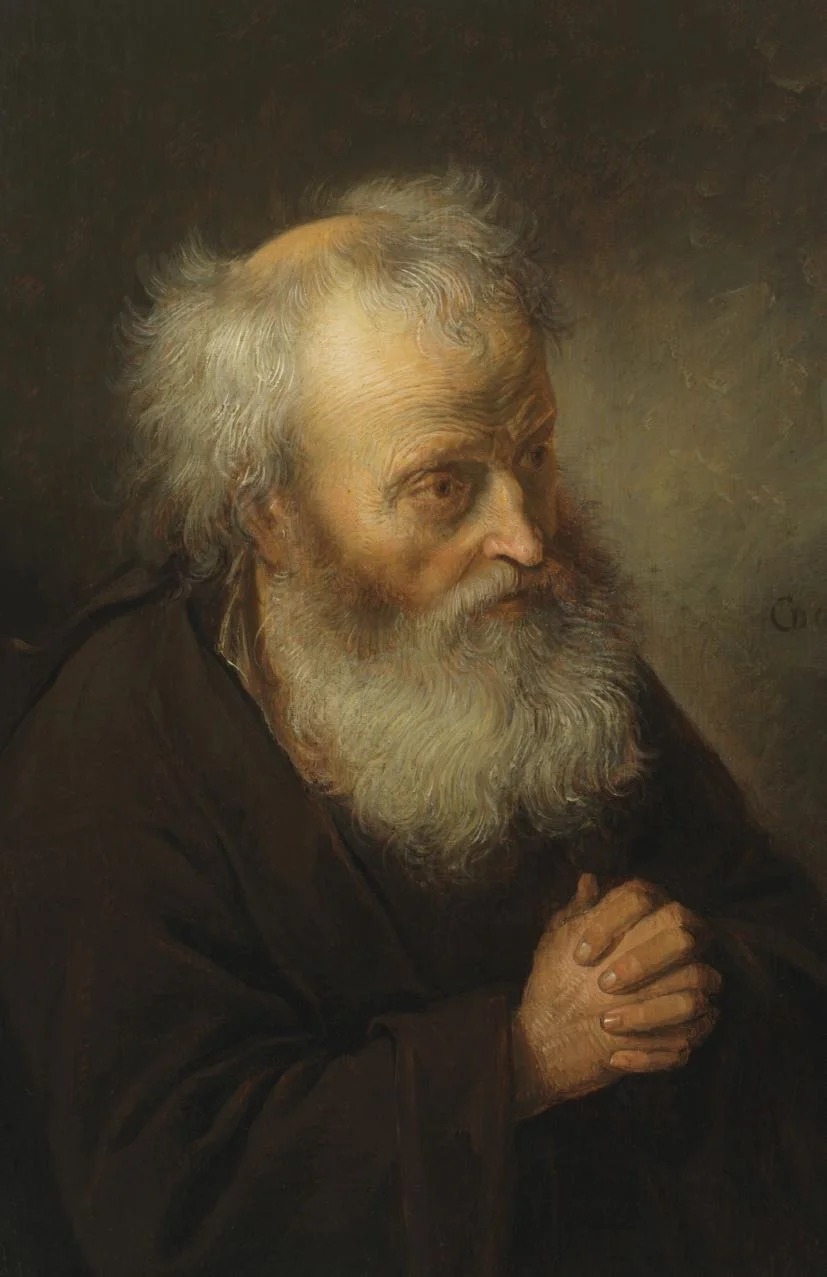
18 × 12.7 cm. Leiden Collection.
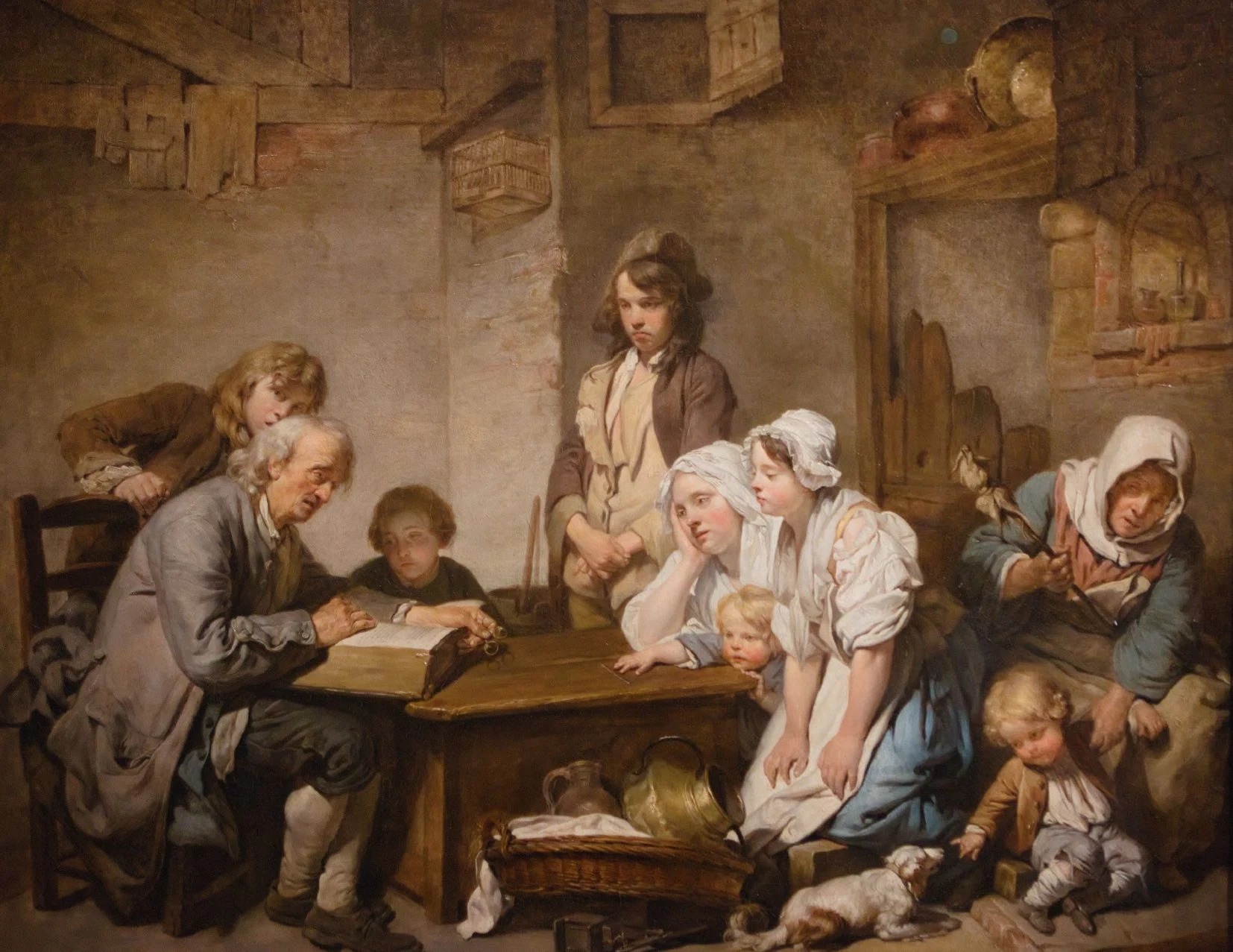
canvas, 65.3 × 82.4 cm. Louvre Museum.