

Wisdom Calls Out
The wisest men are the best, and the best the wisest; but a counterfeit of knowledge is the great deceiver of the world. Millions take the knowledge of bare words, with the grammatical and logical sense, instead of the knowledge of the things themselves, which by these are signified; as if the glass would nourish without the wine, or the dish without the meat, or the clothing or skin were all the man…
…God, and holiness, and heaven, are better known by many serious unlearned Christians that cannot accurately dispute about them, than by many learned men, who can excellently speak of that which their souls are unacquainted with. The hypocrite’s religion is but an art; the true Christian’s is a habit, which is a divine nature.
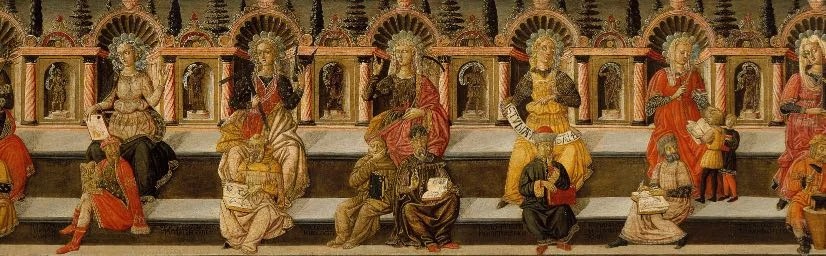
with gold finishes, 50 cm × 159 cm. Museu Nacional d'Art de Catalunya.
The Enduring Relevance of Proverbs
Proverbs maintains an enduring relevance for humanity. Proverbs is timely and timeless—a treasure trove for disciple and church leader, father and mother, youth and adult, world citizen and civic ruler. Across ages, eras, and cultures, Proverbs proves the relevance and superiority of God’s eternal wisdom. It unashamedly asserts that this is God’s world and those who rightly order their lives after God’s design will best navigate the complexity of this fallen cosmos with a well-lived life. Proverbs is God’s inspired word to help us live wisely in the whole of life—to faithfully trek through the current world and to joyfully enter into the world to come, world without end. It addresses both our temporal earthly existence and unending eternal bliss. As we read “the proverbs of Solomon” (Proverbs 1:1) given to his son, we find ourselves among his audience—among his other “sons” (4:1; cf. 5:7; 7:24; 8:32)—eager to obtain a life of spiritual understanding. Although Proverbs is an ancient text, “wisdom calls out” (1:20) to us even today as it was calling out to Solomon’s son in his day.
To what does wisdom call us? The book of Proverbs orients us to the life of faith as moral formation in the fear of God (1:7). It depicts the life of faith as a journey toward wisdom— urging us to choose the path of righteousness, forsake the way of evil, and learn to walk prudently in God’s world. Importantly, this piece of wisdom literature offers vivid, side-by-side portraits of godly manhood and virtuous womanhood. These portraits inspire the young to emulate godliness put on display by trustworthy exemplars. It also inspires this godly emulation with warnings depicted by godless examples—the self-destructive gang, the self-corrupting evil man, and the self-ensnaring wayward woman. But one of Proverbs’ great features is that it also outlines pathways for crossing thresholds from naive youth to mature adulthood. Part of Proverbs’ genius is its divine guidance on how to move—to make passage—from naivete and simplicity to wisdom and prudence. These summons are as relevant today as they were in Solomon’s day.
Solomon had to prepare his son for a dangerous world—a menacing cosmos filled with hazard to heart and home. Solomon’s household were members of a royal family, so the nobility and purity of his sons’ personal lives had to match the dignity and significance of the regal office. But the path to personal nobility and vocational excellence is lined with obstacle, foe, scoffer, and peril. In this sense, the world in Solomon’s day is not too different from our own. Voices clamor for our attention, seeking to undermine personal faith and household integrity. Society and faith community are assaulted by false belief and errant ideology. Dark enemies lurk, tempting us to moral compromise, foolish living, and childish fancy all in the name of pleasure-seeking. Foolishness adorns itself with an attractive exterior. Evil parades under the banner of human progress. Lust endears itself to humanity with empty promises of immediate gratification. The mesmerizing appeal of manifold vice sabotage meaningful vocation and lifework. A God-opposing enemy seeks to lead the youth, the simple, and the foolish off a precipice of their own making. Proverbs clearly shows that the path to death and destruction is lined with glittering charms—forbidden delights that escort us to our own demise.
Yet the book of Proverbs assists us in navigating a world fraught with subtle and hostile enemies. Solomon’s counsel beckons us to wisdom in the fear of God, a fear that will help us to revere God in awe and affection such that we do not fear the surrounding foes nor yield to their tyrannical demands. But Solomon was not only interested in raising a son who would embody wisdom to navigate a dangerous world. He wanted his son to grow up to be a man who would deploy his faith—a faith formed in wisdom—into a broken world, enacting godly prudence in society on behalf of God. That is, Solomon wanted his son to grow up to be regal agent who would transform the disordered world, reclaim it for righteousness, reorder it after God’s design, and render it subservient to Christ. Solomon wanted young women to forsake the life of the wayward harlot and to embrace the nobility of a virtuous woman. Femininity adorned with faith, wisdom, and godliness becomes a potent, sanctifying influence in the world. Proverbs’ penchant toward juxtaposition, helps young disciples—male and female—learn their specific roles in being righteous and redemptive agents in the world. The voice of Lady Wisdom still calls out to us with undiminished relevance, eager to help us face the complex and troublesome challenges of our day with an unswerving faith, a venturesome spirit, and an uncompromising conviction. What we will see next is that the plentiful fruit of biblical wisdom is born from the womb of an indispensable spiritual organ—the fear of the Lord.
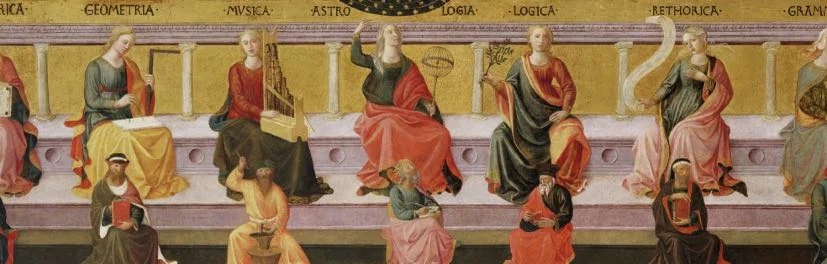
41.5 × 147.3 cm. Birmingham Museum of Art.
Key Ideas
- Proverbs provides timely and timeless wisdom for God’s people.
- The wise are people of faith and moral formation—people who fear God, follow God’s ways, and embody righteousness.
- Wisdom education seeks to train people how to rightly live in God’s world, which is currently dangerous and deadly because of the results of sin.
- Acquiring biblical wisdom equips God’s people to be redemptive agents in the world.
Reflection Questions
1. How do you tend to think about the book of Proverbs? What role has it had in your own faith development and spiritual formation?
2. What makes the book of Proverbs timely and timeless in its relevance? What new insights have you gained about why God gave his people this book?
3. Why is wisdom so foundational to the life of faith? How can gaining biblical wisdom help us navigate the complexities of the fallen world in which we live?
4. How might Proverbs be relevant to your own faith journey? How might it help you in the leadership, family, ministry, and vocational roles which God has given you?
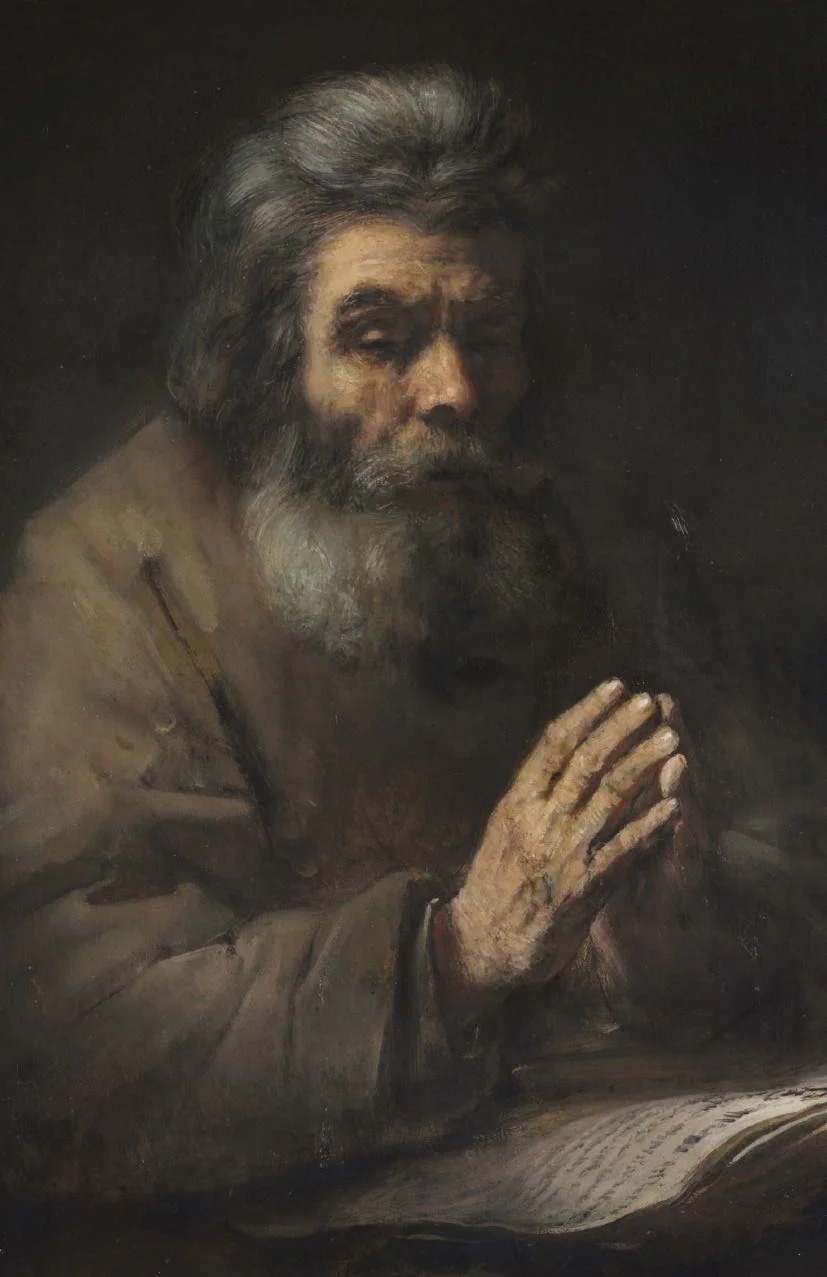
canvas, 87.3 × 72 cm. The Cleveland Museum of Art.
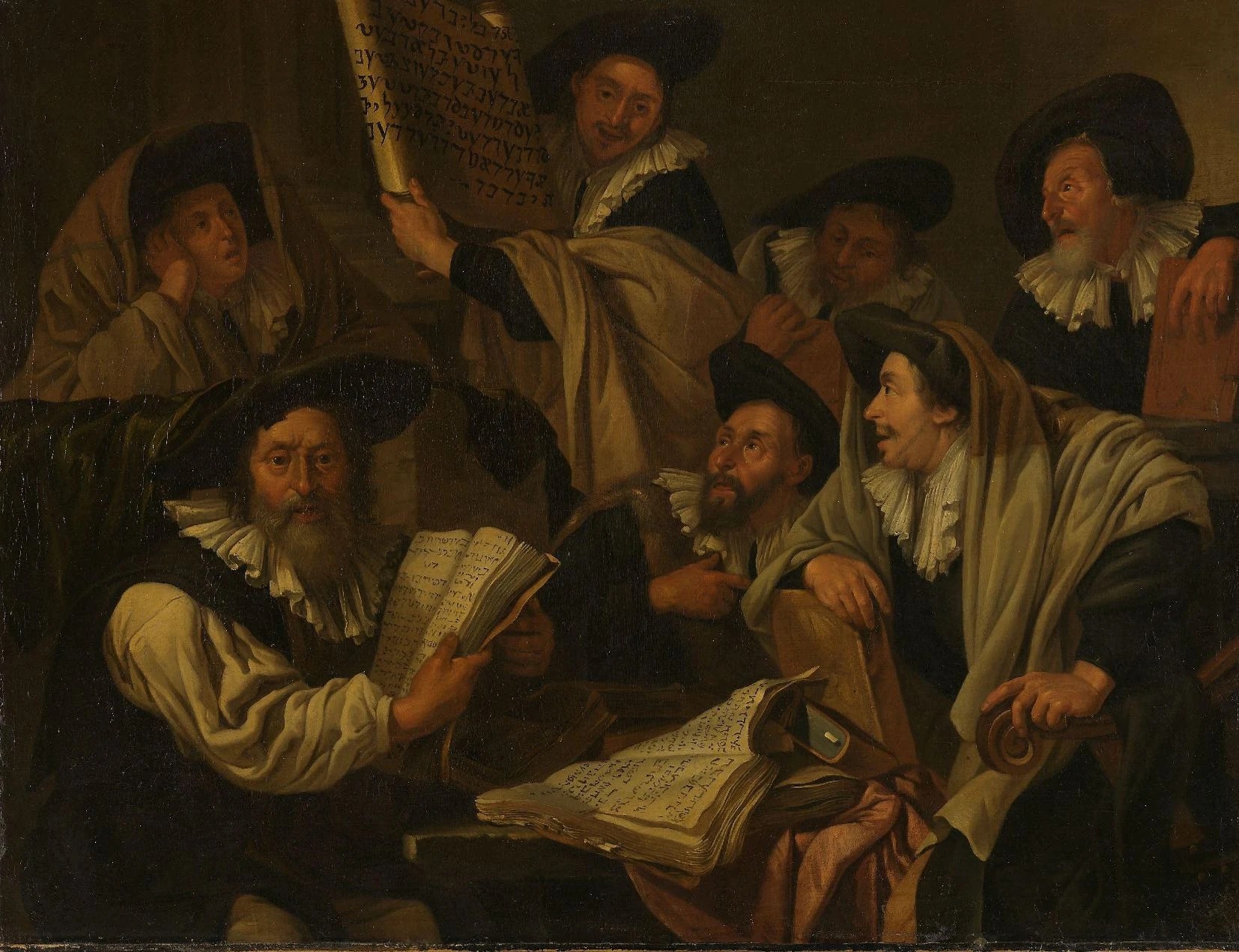
canvas, 66 × 82.5 cm. National Museum of Art.