

By Me Kings Rule
It is a strange fact that the law of sex runs through all Christian work. The feminine element is needed as well as the masculine. Man may be aggressive, bold, strong, fitted to pioneer, organize, administer…
…but woman is patient, impressive, tender, sympathetic, fitted to win, to soothe, to comfort, to minister. Both together bring to the work the complete furnishing that leaves no element of adaptation lacking.
Portraits of Godly Manhood and Womanhood
To view faith formation as becoming wise in the fear of God is to gain a helpful picture of what it looks like to be mature. But faith maturity, moral formation, and growth in biblical wisdom are not generic. Side by side, Proverbs offers portraits of godly manhood and godly womanhood. The reader of Proverbs is to look at the exemplars in Proverbs as models to emulate and the depictions of folly as warnings to heed. While there are characteristics commonly shared between mature men and women, godly men and godly women will uniquely display wisdom and faith maturity. The thesis of Proverbs is simple: wisdom turns boys into honorable men, girls into noble women, the simple into wise rulers, those who lack sense into just governors, the ignoble into paragons of virtue and nobility. Proverbs gives us pictures of kingly men and noble women.
This thesis is seen throughout the whole book. Proverbs begins with Solomon’s household instruction to his son (Proverbs 1:8-10, 15) and ends with Lemuel’s words on what it means to be a noble king (31:1-9) and virtuous woman (31:10-31). It is also detailed in the introductory section of Proverbs 1–9. In this introduction, Solomon constantly addresses his “son” (1:8, 10, 15; 2:1; 3:1, 11; 3:21; 4:10, 20; 5:1, 20; 6:1, 3, 20; 7:1), and at times speaks to “sons” (4:1; 5:7; 7:24; 8:32), potentially to address the larger community of faith. The family instruction from mother and father (1:8; 4:3; 6:20; cf. 10:1) to a youth eventually becomes an invitation to royalty: “by me kings reign, and rulers enact just laws; by me princes rule, and all nobles who govern justly” (8:15-16).
In this section, there are also intentional contrasts. Wise men and women are juxtaposed with evil men (2:12-15) and the sinful woman (2:16-19). For those who follow Solomon’s sage advice, wisdom will be a “garland of grace on [their] head” (1:9; cf. 4:9), “a pendant around [their] neck” (1:9), “adornment to [their] neck” (3:22), and “a crown of beauty” (4:9). These ornaments of beauty, dignity, and royalty contrast the gaudy, garish, and tawdry decorations of the wayward woman (6:25; 7:10-11). Wicked, violent, and devious men (1:12, 18; 3:31-32) contrast the wise, righteous, and godly man (9:8-9). The pseudo-masculinity of the sinful gangs (1:10-19) is in contrast to the righteous man and noble ruler (8:15-16; 9:8-9). The feigned femininity of the foreign woman (2:16-19; 5:1-23; 6:20-35; 7:1-27; 9:13-18) is starkly grotesque over against the beautiful wife of one’s youth (5:18-19; cf. 31:10-31) and the immaculate and unmatched beauty of wisdom. Importantly, wisdom is portrayed as a virtuous and hospitable woman (1:20-33; 3:13-18; 4:6-9, 13; 8:1-36; 9:1-12; cf. 6:6-11); folly is depicted as a boisterous dame and personified as a promiscuous, unbecoming harlot (9:13-18).
Inasmuch as Proverbs is for both young and old, it is also for both men and women. Wisdom affords an equal opportunity for young boys and young girls alike to grow up to become godly men and godly women. To adorn oneself with wisdom is to embrace the fear of God within one’s inner being. The same fear of God will manifest itself in nuanced ways as boys become honorable men and girls become virtuous women. Throughout history and culture, the world has sought to artificially accentuate the differences between the genders or irresponsibility collapse these God-appointed distinctions. Proverbs will allow neither extreme. Solomon’s appeal is a compelling summons for all to embrace Lady Wisdom. But when Lady Wisdom is embraced, her devotees manifest themselves in noble manliness and virtuous womanliness in the fear of God. Solomon’s exceptional and enduring lectures amount to a holy summons to be rid with puerile fancies and embrace divine delights, to forsake juvenile fetish and promote a palate refined in righteousness, to abandon childish folly and walk on the paths of wisdom.
Key Ideas
- Proverbs provides portraits of godly manhood and womanhood.
- Proverbs uses exemplars as models to emulate and foils as warnings to avoid.
- Godly men and women share the same basic elements of faith and godly character, but the display of genuine faith will uniquely manifest itself in nuanced ways for men and women.
Reflection Questions
1. How does our culture view men and women? What are some points of current cultural confusion around masculinity and femininity?
2. How does Proverbs (as a whole and the first nine chapters) offer portraits of godly manhood and womanhood? What characters are at play in the beginning chapters of Proverbs? How do these characters serve the larger agenda of depicting faith formation in wisdom?
3. How do these portraits help shape your understanding of what it means to grow in the faith? How important is modeling and emulation to wisdom and faith formation?
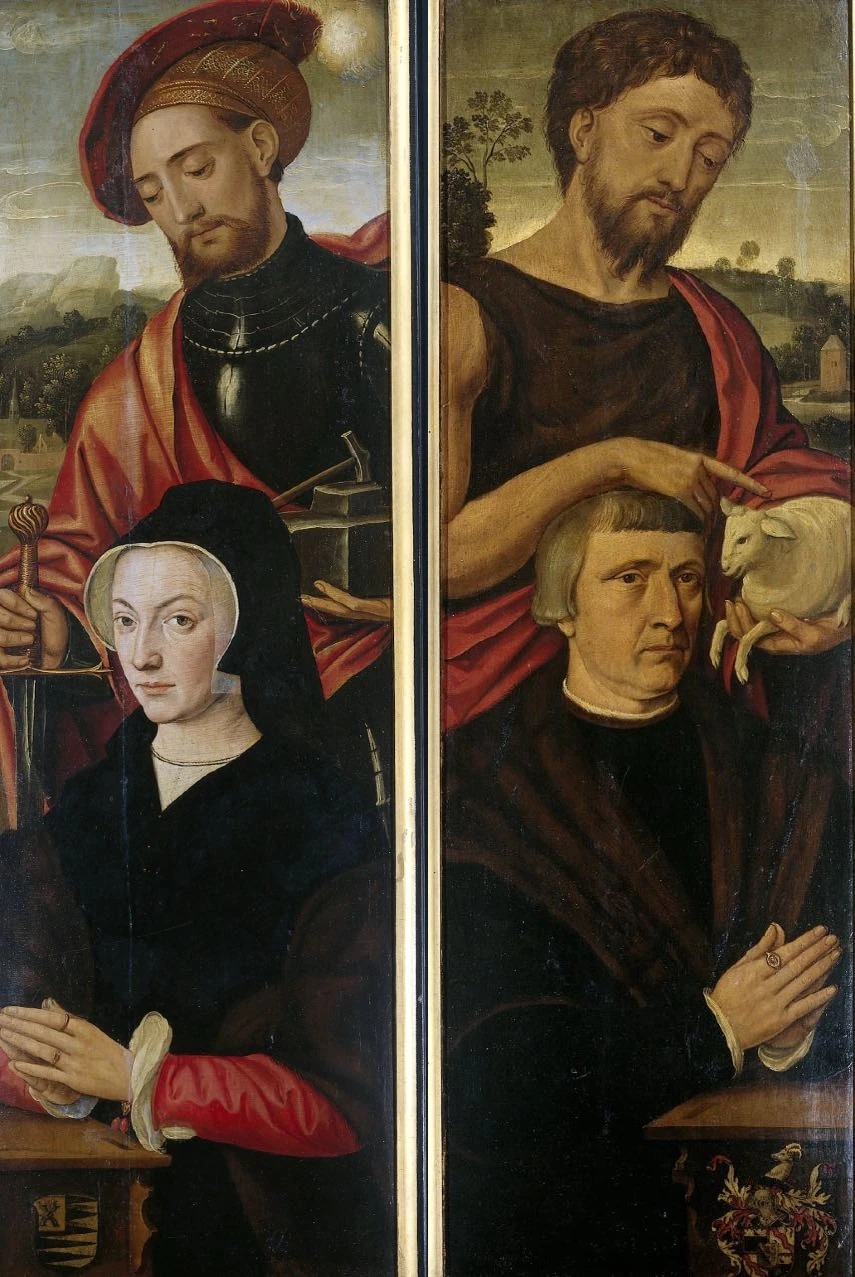
Donors with Saints Adrian and John the Baptist. 1530. Oil on
panel, 91 × 29 cm. Rijksmuseum.
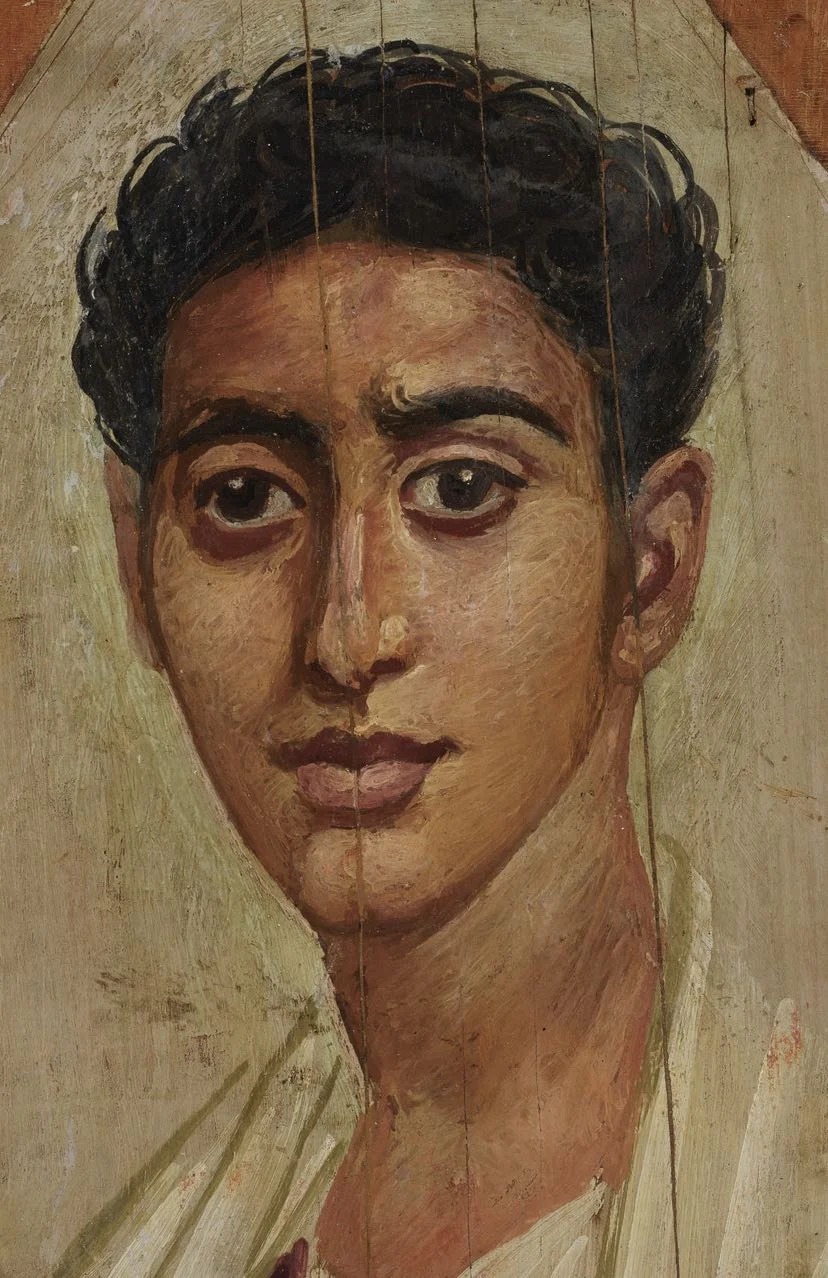
pigments) on wood, 39.4 × 20.5 cm. The Walters Art Museum.
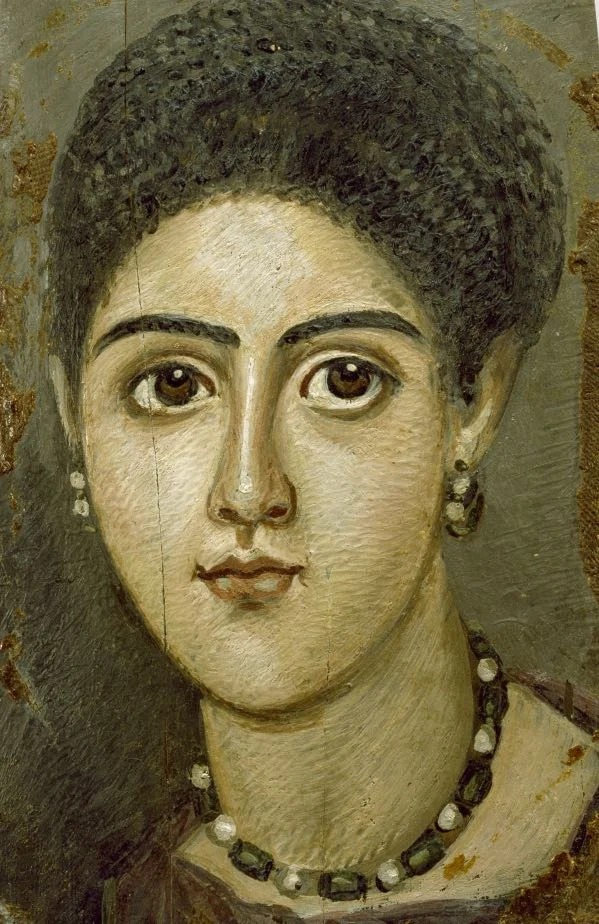
pigments) on wood, 44 × 18.9 × 1.4 cm. The Walters Art Museum.