

Do Not Forget My Teaching
We teach morality while we teach spirituality; and I have always found that the gospel produces the best morality in all the world…Morality, however, by itself is comparatively a small thing. The best part of what you teach is godliness. I said not, ‘religion,’ but godliness. Many people are religious after a fashion, without being godly…
…Many have all the externals of godliness, all the outside of piety; such men we call ‘religious,’ but they have no right thought about God. They think about their place of worship, their Sunday, their books, but nothing about God. He who does not respect God, pray to God, love God, is an ungodly man, whatever his external religion may be.
Godliness is true wisdom.
Developing a Biblically-Based Spiritual Pedagogy
From a biblical standpoint, successfully making passage from one faith milestone to the next is best understood as a rite of transformation. Inasmuch as we are pilgrims who make progress in the journey of faith, we are also works in progress who are becoming more and more who God wants us to be. Problems result when we enter a new life season without experiencing an accompanying and fitting change. Too many biological adults are spiritual children. Skilled professionals can sadly remain amateurs at life. Seasoned seniors who reach their latter years can be just as childish as a toddler. Many reach adulthood but cling to immature and adolescent trivialities. Intellectual giants and academic luminaries can be juvenile in character and lacking in spiritual vibrancy. In we are not intentional about spiritual formation, parents can successfully bear children without the maturity to actually raise children.
Essentially, to advance in years is not the same as to grow in the faith. To become the kind of person God wants us to become will require change, growth, and development. Consequently, making passage across major life milestones is meant to be transformative. Proverbs 1–9 is a highly nuanced foray into a spiritual pedagogy: a study of how people change and grow in the faith. Fathers and mothers, pastors and counselors, teachers and leaders are given the weighty duty of helping people to make progress in the faith. This means that those who serve in a leadership capacity must become students of human nature. Keen insight into the nature of humanity enhances our ability to be constructive overseers in another’s shepherding care. In short, the more we understand how humans work the better we get guiding people in faith development and moral formation.
Strewn throughout Proverbs 1–9 are identifiable elements that contribute to a biblical anthropology: a theological understanding of the essential makeup of humanity. In this opening section of Proverbs, Solomon’s lectures to his son help all readers consider the various aspects of human composition. Humans are complex creatures made up of a multitude of faculties. Typically, people identify the physical (bodily-material) and spiritual (non-material-numinous) dimensions of humanity. Others understand and classify human proficiencies with the threefold domains of character, knowledge, and skill. Proverbs offers a unique and nuanced take on human makeup. Understanding Proverbs’ depiction of human nature—the various faculties of human composition—helps us to focus our learning in transformative ways.
To understand biblical spirituality and to shepherd Christian formation, we must attend to the whole of the human—body (Proverbs 3:8; 4:22; 5:11) and soul (2:10; 3:22). Solomon’s lectures address various components of humanity. While we cannot do an exhaustive treatment of this study, we can highlight several components to showcase Proverbs’ advanced and nuanced anthropology. Clearly, Solomon addresses human knowledge: what we comprehend and understand (1:2, 4, 7, 29; 2:2-3, 5-6, 9-10; 3:13; 5:1-2; 8:9-10, 12; cf. 9:13). Israel’s king also appeals to affections: the things we love and hate, adore and despise (1:7, 22, 29-30; 3:11; 4:6; 5:12, 19; 6:16, 30; 7:18; 8:13, 17, 21, 36; 9:8). Solomon is also concerned about good and godly desires: the things which bring us pleasure, satisfaction, and delight (1:13, 19, 26, 31; 2:10, 14; 3:10, 15, 31; 4:17; 5:18-19; 6:30; 7:18; 8:11, 21, 30-31; 9:17). He is urgent about healthy relationships: the people we attach ourselves to, the associations we make, the intimate relationships we enjoy, and the commitments we establish (1:11, 14-15; 2:17, 19; 4:15; 5:8, 15-20; 6:1, 14, 19). Solomon connects moral formation in wisdom to how one responds to authority: deference toward leaders, but more so receptivity to God’s word, acceptance of God’s truth, and submission to God’s rule (1:3; 2:1; 3:11; 4:10)
Additionally, Proverbs issues warnings about our conduct: the way we act, behave, and live our lives (1:11, 16; 3:22; 6:18). It also summons us to moral character: a quality of life expressed in virtue, godliness, and righteousness (1:3; 2:7-9, 21; 3:32; 4:11). Along with Solomon’s son, we are encouraged to establish and cultivate spirituality: a genuine relationship with the one and only living God based upon faith, trust, and the fear of the Lord. We are enjoined to develop attention: focus, intentionality, and concentration on what is most important (1:8, 25, 33; 2:2; 3:21; 4:1, 10, 20-21, 23; 4:25; 5:1, 11; 7:24; 8:6, 33-34). Humans must grow in godly attractions: to be drawn toward that which is honorable, noble, dignified, excellent, and praisworthy (1:9-10; 3:16, 22, 35; 4:8-9; 5:9; 6:24, 33; 8:6, 15-16, 18; 9:13). Proverbs seeks to train us in correct values: treasuring, keeping, and guarding that which is most precious and important (2:1, 20; 3:1, 3, 9, 14-16; 3:21; 4:4, 8, 13; 5:2; 6:20; 7:1-3; 8:10-11, 19). We are called to train our will: learn to make right decisions and orient our lives on a good trajectory that leads to life and reward (1:10, 23-25, 29, 32; 3:27, 31; 4:26-27; 5:7; 7:25). In addition, we notice the importance of memory (2:17; 3:1; 4:5), speech (2:3; 3:28; 4:24; 5:2; 6:2-3, 17, 19; 8:6-9; 9:12; cf. 2:12, 16; 3:33; 5:3; 6:12, 24; 7:5, 21), emotions (2:14; 3:24-25; 5:18; 8:30-31), loyalty (1:8; 4:2, 4-6; 6:20), inclination (1:28; 2:2-4; 4:20; 5:1, 13), intentions (1:31-32; 2:15, 22; 3:29, 32; 6:13-14, 18), and wonder and imagination (8:1-36).
The theological anthropology in Proverbs 1–9 presents a holistic view of humanity and calls us to specific learning objectives. We should prudently shape our instruction, teaching, preaching, discipleship, and counseling to address the various faculties of human makeup. Whether pastor, parent, or pedagogue, faith leaders should learn to shape, scaffold, and direct their instruction to the whole person: establish true belief (knowledge), develop competency (skill), order loves (affection), shape appetites (desires), stir wonder (awe), capture imagination (curiosity), shape character (virtue), form healthy attachments (relationships), fortify attention (focus), develop habits (custom), hone skills (proficiency), purify motives (intention), train judgment (good sense), reform conduct (behavior), and mature attractions (appeal and draw). Overarching these domains of learning is a goal to cultivate the fear of God in order to build a biblical worldview—a God-centered way of seeing the world and living in it.
In the course of his discourses, Solomon also identifies various approaches to formation, helping us develop a distinctively biblical pedagogy to our work in faith formation. Proverbs commends an approach to formation that involves embodied learning, experiential instruction that engages the whole person (4:20-27) and is participatory (2:1–4). It emphasizes the irreplaceability of internalization (interiorization), seeking for truth to become possessed in the inner being (2:1–4). It highlights the importance of formation in a family (1:8-10, 15; 2:1; 3:1, 11, 21; 4:1, 10-11, 20; 5:1; 6:1, 20; 7:1) and community context (5:14) that is intergenerational (4:1-9). Inspired Scripture already understood and revealed what is highly regarded as quality pedagogy today: the importance of modeling, apprenticeship, and experiential learning. Within this context, we even see various teaching methods employed and endorsed: lecture, discussion, and role playing. The employment of these methods allows learners to gain appropriate experience, exposure, and discovery in the world so that they learn of its dangers and snares ahead of time.
When wisdom in the fear of God takes spiritual formation seriously, we must become students of human makeup. God has designed a complex and beautiful world and he has populated his world with human beings, creatures intricately designed and fashioned in the image of God. Of all that God has made, humans are God’s very noble image. Although human nobility has been tarnished in the fall, human dignity has not been lost. It can be restored. Fallen creatures can become new again. The powerful promise of the Bible is that we can undergo spiritual transformation. We can experience this change in the whole of life. While a human is not the mere sum of his varied faculties, each person is masterfully crafted with divine intent. Spiritual formation seeks holistic transformation so that people can one day become full-fledged citizens in the world. And godly citizens in God’s world takes seriously what it uniquely means to be royal—noble manhood and virtuous womanhood.
Key Ideas
- Proverbs offers a spiritual pedagogy—a foundation and framework to understand how people change and grow in the faith.
- Proverbs presents a holistic theological anthropology; Solomon addresses a variety of domains and faculties that makeup human nature.
- We should embrace proven strategies, approaches, and methods for formation that seek for transformation and change.
Reflection Questions
1. Who are some of the best teachers you ever had? What made them such impactful teachers?
2. When have you ever experienced true life change? What were the dynamics and elements that encouraged real and enduring transformation?
3. How does Proverbs 1–9 serve as a spiritual pedagogy—an introduction into spiritual formation and transformative learning? How does it give insight into how people change and grow?
4. How do these principle help you develop your own skills in parenting, teaching, and ministry?
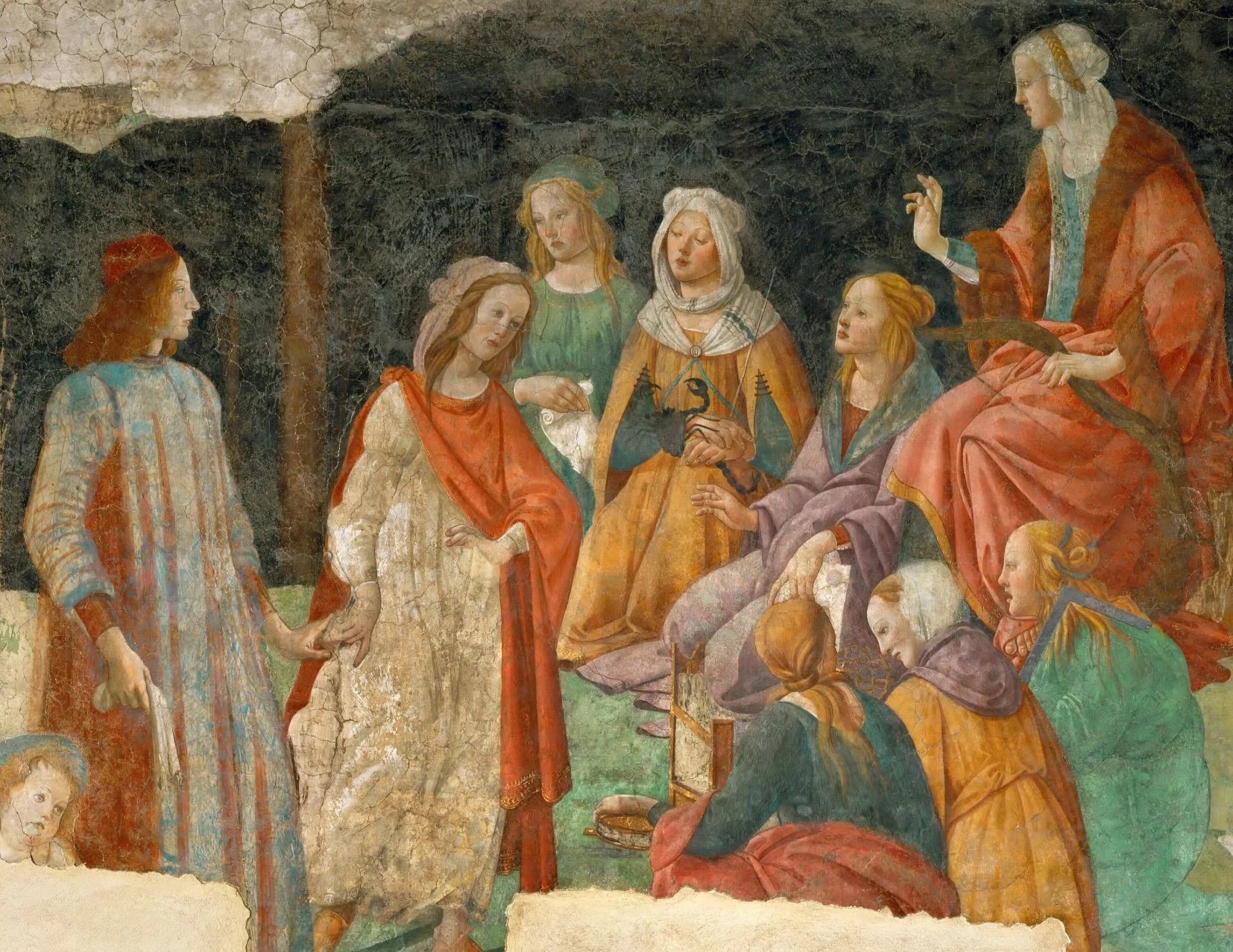
1445. Fresco, tempera, plaster, 238 × 284 cm. Louvre Museum.
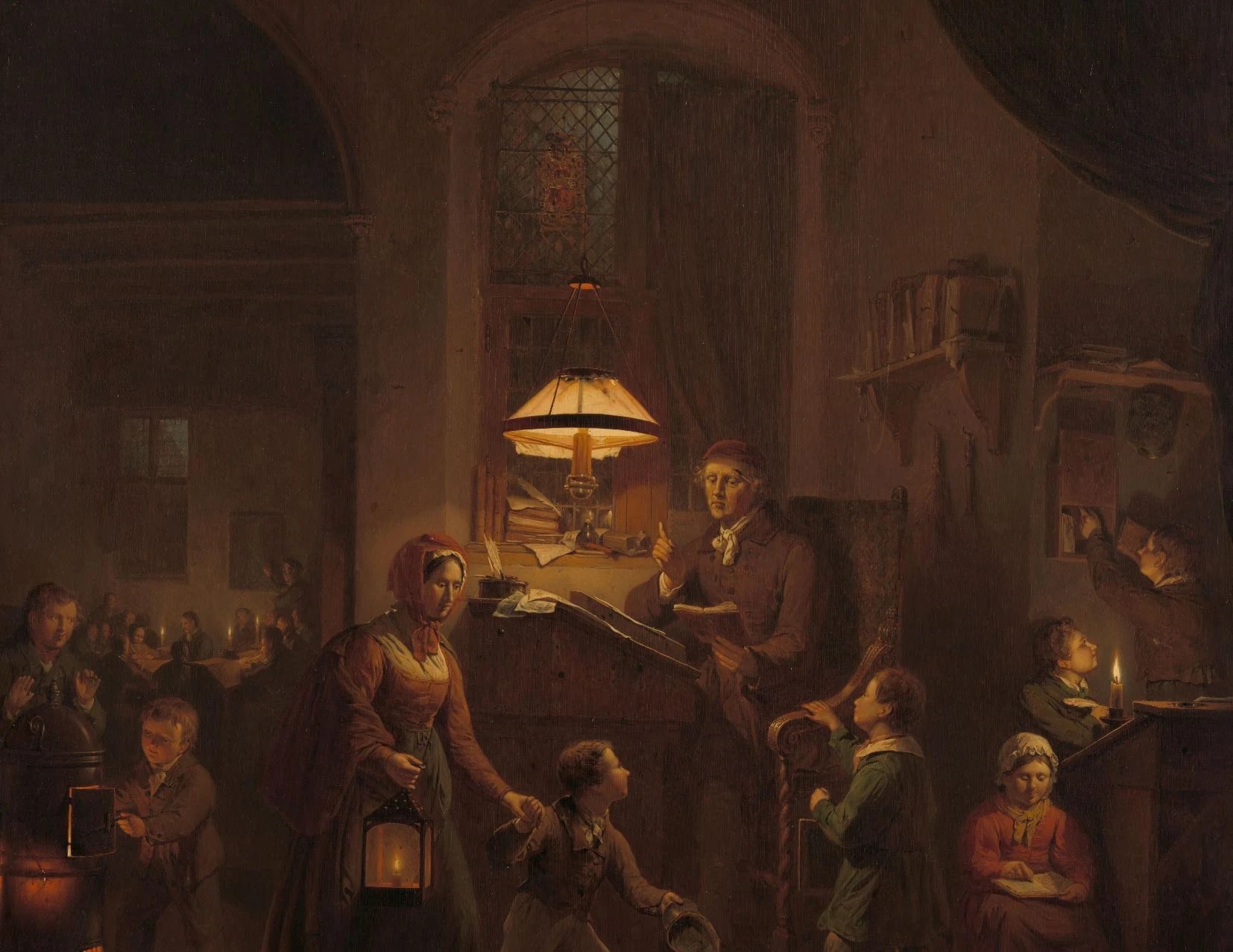
panel, 64 × 50 cm. Rijksmuseum.